Iron treatment
How to take iron tablets
By The Iron Clinic
INSERT: reviewer name INSERT: review date
Take one iron tablet a day, ideally first thing in the morning on an empty stomach with water, and keep tea, coffee, milk and antacids at least two hours away. If side effects are a problem, alternate days work. Keep going until a follow-up blood test shows your iron stores are full.
One tablet a day
The usual adult dose is one tablet a day, for example one 200 mg ferrous sulfate tablet. For most people, one tablet a day is enough. A dose of iron raises hepcidin, the hormone that controls iron absorption, and it stays raised for about a day, so a dose taken the next morning is absorbed less well. By 48 hours it has settled again. In studies, larger doses and twice-daily doses added much less iron than their size suggests.
Timing
Iron is absorbed best on an empty stomach, ideally first thing in the morning: take it 30 minutes before eating, or 2 hours after. Swallow the tablet whole with water. Taking it at the same time each day makes it easier to remember.
Food, drink and other medicines
Leave a 2-hour gap between your tablet and tea, coffee, milk and other dairy foods, and eggs, all of which reduce absorption. Calcium supplements, antacids and indigestion remedies, levothyroxine for an underactive thyroid and some antibiotics also need to be kept apart from iron. Ask your pharmacist how long a gap you need.
You do not need to take iron with orange juice: a trial of 440 adults found that vitamin C added no benefit.
Side effects
Constipation, diarrhoea, tummy pain, heartburn and feeling sick are common. Darker poo is common on iron tablets and is usually nothing to worry about.
If your stomach is upset, taking the tablet with or after food can help, although food can reduce how much iron is absorbed. If side effects carry on, talk to your GP or pharmacist. Our advice is to stop for five days, then restart with one tablet on alternate days. In trials, alternate-day dosing absorbed a larger share of each dose and caused fewer stomach side effects.
How long to take them
Most people see their anaemia improve within 4 to 6 weeks, but refilling your iron stores takes 3 to 9 months. Your haemoglobin should be checked within the first four weeks to make sure the tablets are working, then your haemoglobin and ferritin again at two to three months. We advise stopping the tablets 3 to 5 days before that test, and continuing treatment until your ferritin is above 50 micrograms per litre.
- StartOne tablet a day
- Within 4 weeksHaemoglobin check
- 2 to 3 monthsHaemoglobin and ferritin; stop tablets 3 to 5 days before
- 3 monthsFerritin not rising towards 30: consider an infusion
- 3 to 9 monthsStores refilled; continue until ferritin is above 50
Ferritin in micrograms per litre
When tablets are not enough
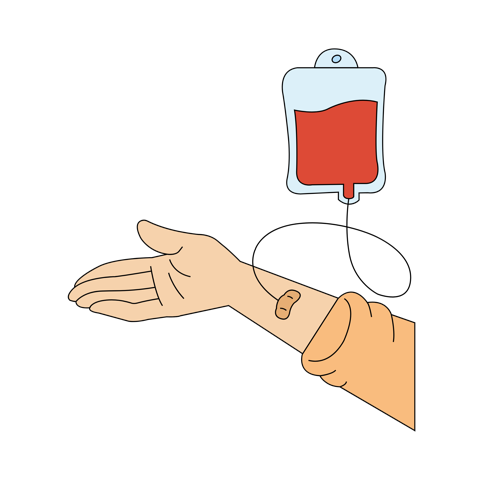
If your ferritin has not risen towards 30 micrograms per litre after three months of tablets taken properly, oral iron may be failing and an iron infusion should be considered. Some people cannot tolerate tablets at all. A ferritin that will not rise can also point to ongoing blood loss, a problem absorbing iron, or tablets not being taken regularly, which your GP should look into. An iron infusion can replace your iron stores in a single treatment.
Keep iron tablets out of the reach of children. An overdose can be fatal for a young child.
Frequently asked questions
Can I take iron tablets with food? Yes, if an empty stomach upsets you. You will absorb less, but a tablet taken with food does more than a tablet not taken.
Should I take iron every day or every other day? One tablet a day is the standard advice. Alternate days is an option if side effects are a problem, and a larger share of each dose is absorbed.
How long until my blood results improve? Haemoglobin should start to rise within the first four weeks, and anaemia usually improves within 4 to 6 weeks. Refilling iron stores takes several months, so keep going until your follow-up test.
Sources
- Snook J, et al. British Society of Gastroenterology guidelines for the management of iron deficiency anaemia in adults. Gut 2021;70(11):2030-2051. doi:10.1136/gutjnl-2021-325210
- NHS. Ferrous sulfate: how and when to take it; side effects; and taking it with other medicines. nhs.uk, pages last reviewed 9 February 2023, read 13 October 2026.
- NHS. Iron deficiency anaemia. nhs.uk, page last reviewed 26 January 2024, read 13 October 2026.
- The Iron Clinic. Frequently asked questions: iron tablet treatment. theironclinic.com, read 13 October 2026.
- Moretti D, et al. Oral iron supplements increase hepcidin and decrease iron absorption from daily or twice-daily doses in iron-depleted young women. Blood 2015;126(17):1981-9. doi:10.1182/blood-2015-05-642223
- Stoffel NU, et al. Iron absorption from oral iron supplements given on consecutive versus alternate days and as single morning doses versus twice-daily split dosing in iron-depleted women: two open-label, randomised controlled trials. Lancet Haematology 2017;4(11):e524-e533. doi:10.1016/S2352-3026(17)30182-5
- von Siebenthal HK, et al. Alternate day versus consecutive day oral iron supplementation in iron-depleted women: a randomized double-blind placebo-controlled study. eClinicalMedicine 2023;65:102286. doi:10.1016/j.eclinm.2023.102286
- Li N, et al. The efficacy and safety of vitamin C for iron supplementation in adult patients with iron deficiency anemia: a randomized clinical trial. JAMA Netw Open 2020;3(11):e2023644. doi:10.1001/jamanetworkopen.2020.23644